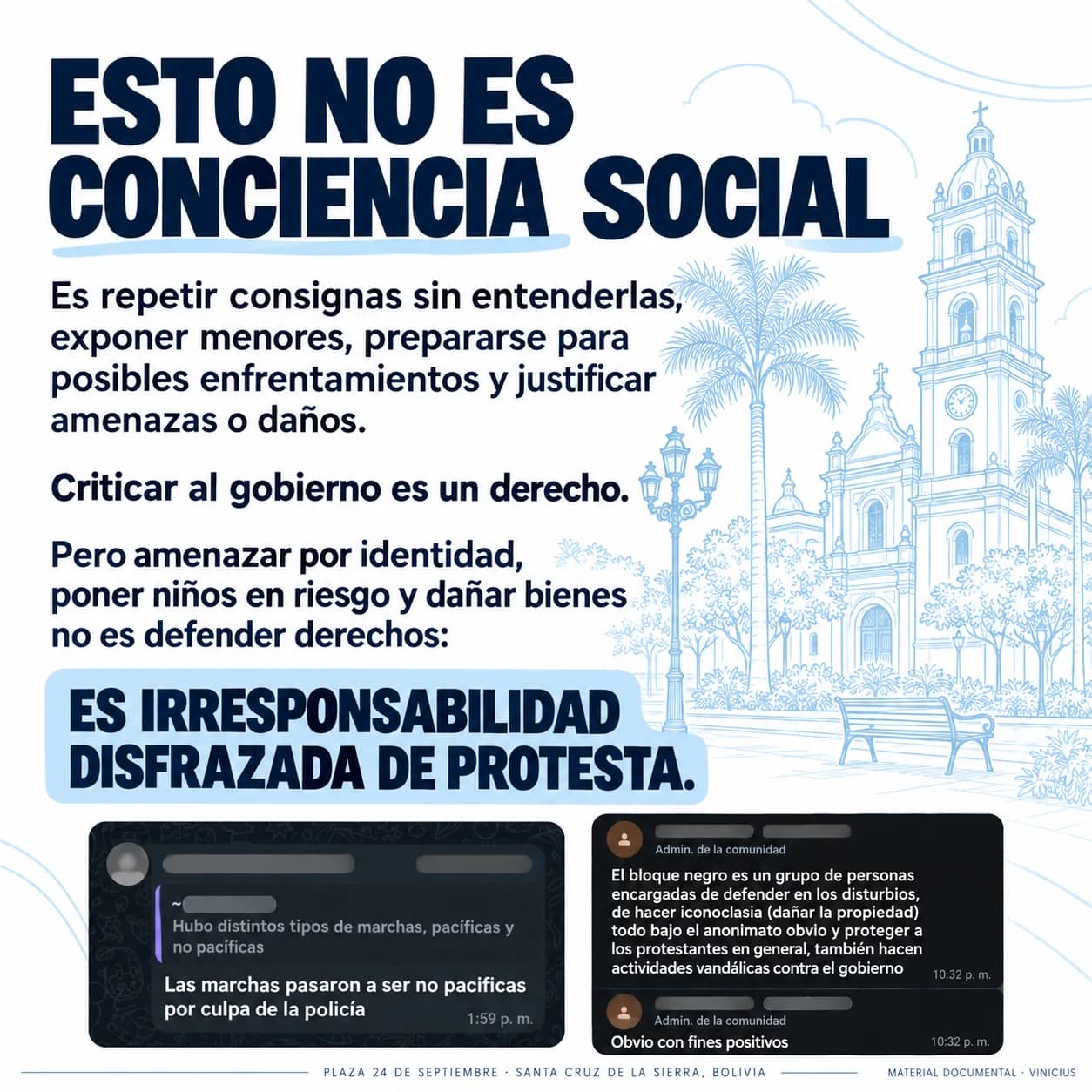
LONG READ · 09 PANELS · SANTA CRUZ DE LA SIERRA
What is behind
these marches?
A documented opinion on how antisemitism, hate, and incitement can be presented as protest in Plaza 24 de Septiembre—and why evidence must remain part of the debate.
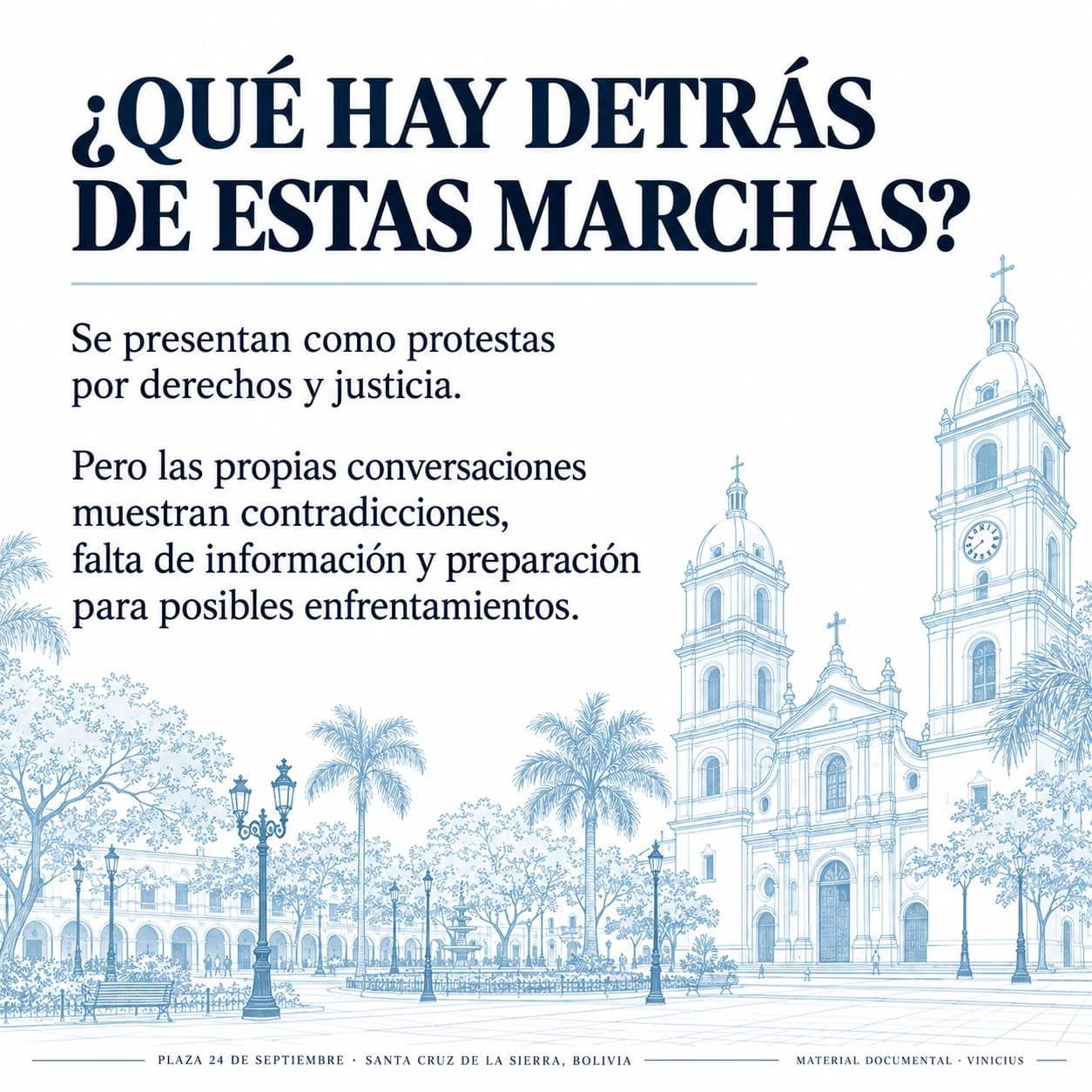
What is behind these marches?
This is where the story begins: the slogans talk about rights, but the documented conversations reveal something else. When messages contradict the public narrative, stop repeating slogans and look at the facts.
Understanding the demands
If someone has to write a script explaining the decrees they supposedly oppose, the question is unavoidable: are they defending an idea or repeating a slogan they do not understand? That is not social awareness; it is inertia.

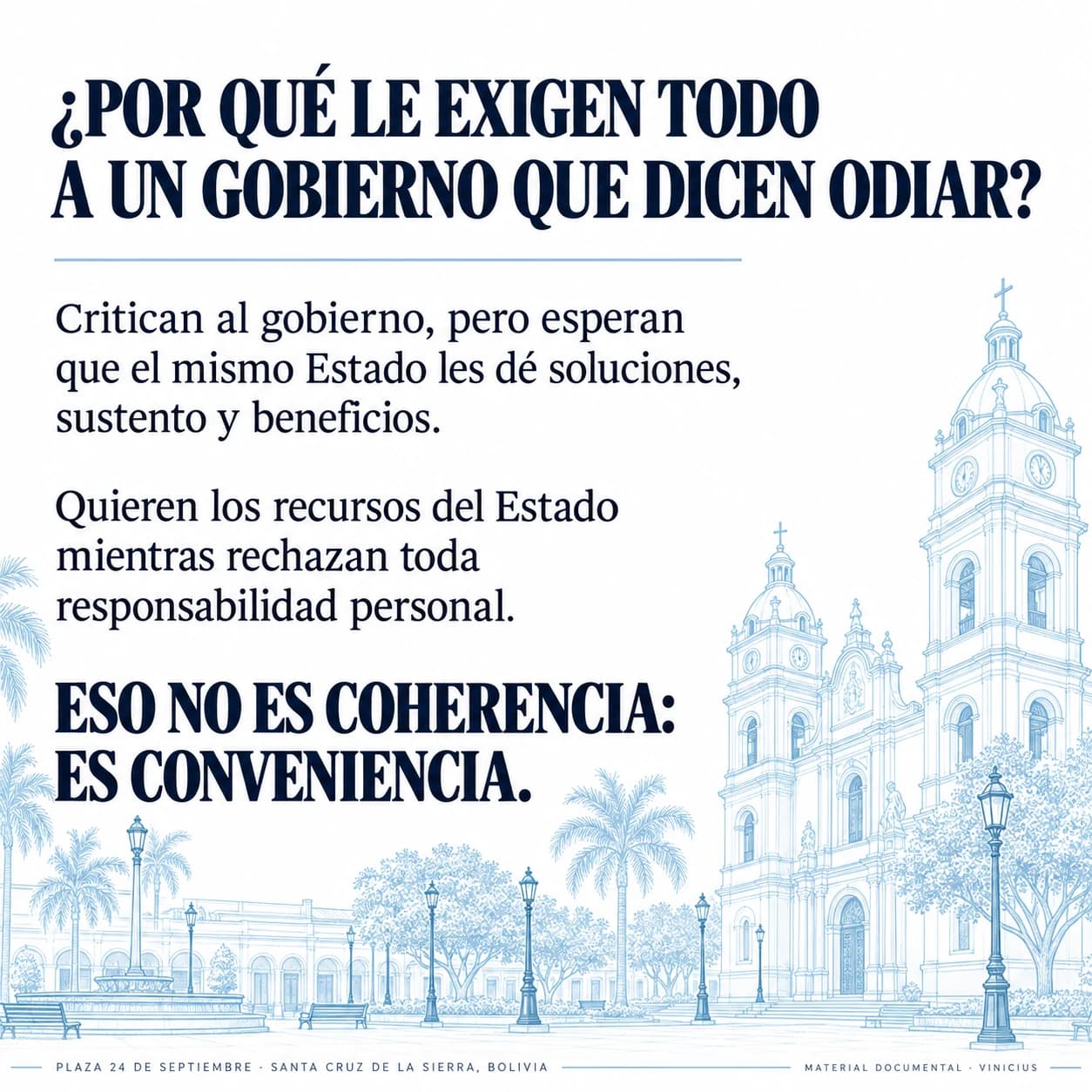
Criticism and dependence on the state
Demanding that a government fall while expecting that same state to solve everything is not rebellion: it is convenience. Criticism of power is legitimate; demanding benefits while rejecting personal responsibility exposes the contradiction.
Minors as a human shield
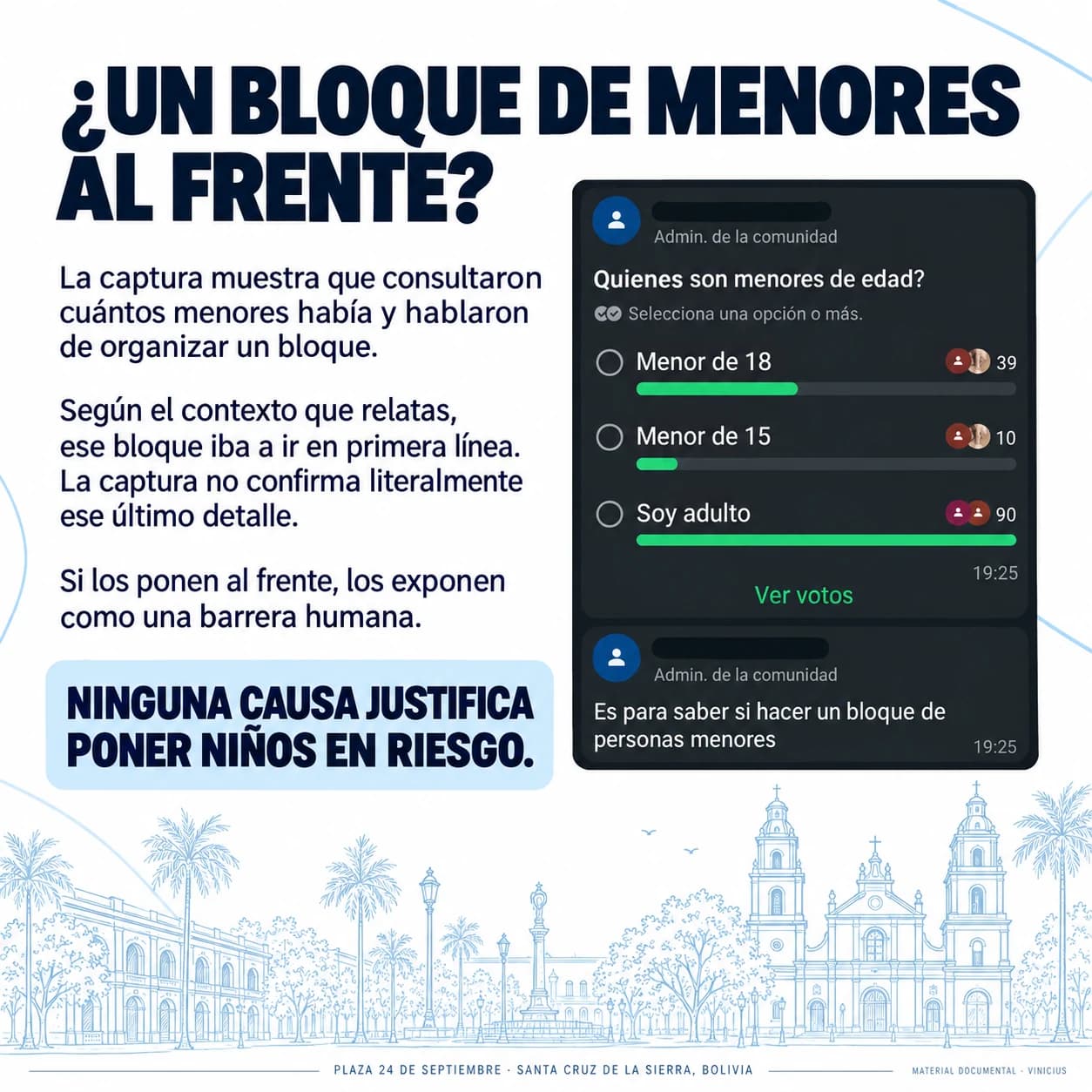
The screenshot asks how many minors there are and discusses organizing a group. If those minors end up at the front, they stop being participants and become a human shield. No cause, however urgent it claims to be, has the right to turn children into protection for adults.
Preparing for confrontation
They discuss masks and personal-defense items before marching, then try to sell it as a peaceful protest. Nothing needs to be invented: the preparation already tells a story. If they prepare for a clash, they must own the consequences.

An explicit antisemitic phrase
This is not an uncomfortable slogan or a tasteless joke: it is explicit antisemitism. Age does not make it less serious, and protest does not make it legitimate. Threats or insults based on identity must be called out without euphemisms.

Political criticism and attacks based on identity
Calling for a government to fall can be a political position. Lumping people together and attacking them because of their identity is something else. Calling hatred rebellion does not turn it into justice; it only disguises it.

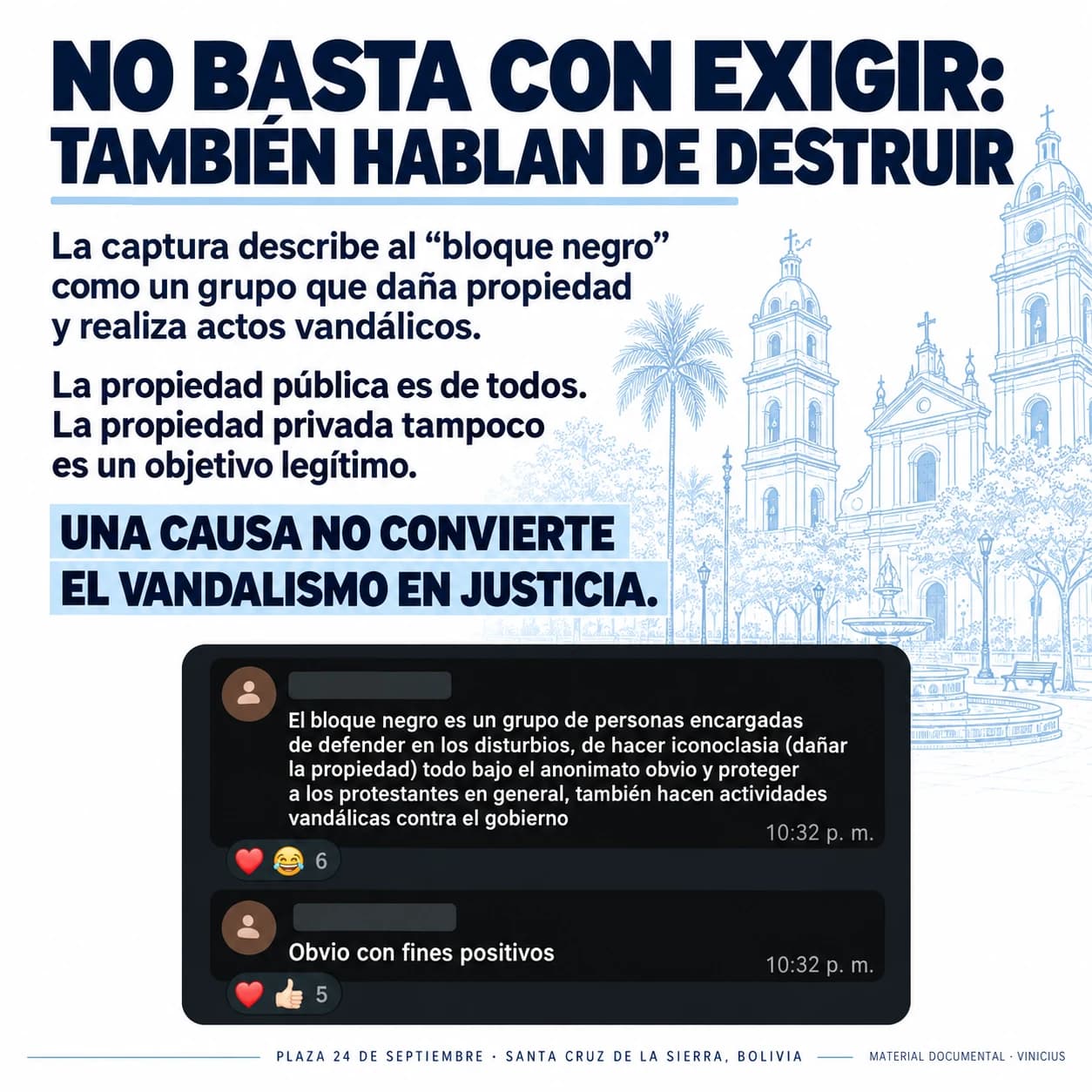
Damage is not an answer
The narrative tries to present vandalism as the noble part of protest. It is not. Public property belongs to everyone, and private property does not become a legitimate target because someone claims to have a cause. Breaking things is not courage: it is impunity.
Responsibility is part of protest
After reading all of this, one question remains: what are they really defending? A protest loses its authority when it needs minors as shields, masks for confrontation, identity-based insults, and vandalism to sustain its story. The narrative collapses when the facts appear.